The Best Way to Judge a Peptide Serum After 45 Is Printed on the Back of the Bottle
Five things worth checking on the label, and the one number most bottles leave off.
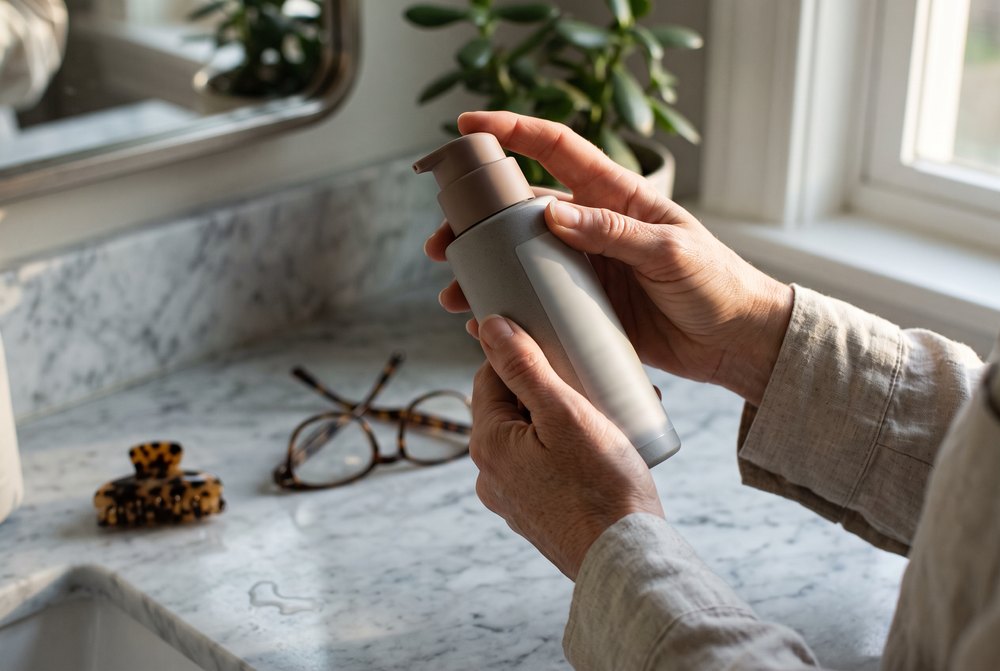
The Ingredient Desk reads back labels and ingredient lists, and prints what is on them.
Every bottle says the same thing.
Firmer. Smoother. Clinically studied. Stand at the shelf at 46 and the front labels read almost identically. So the choice ends up being the box you like the look of. The back label is where the real differences sit, and almost nobody turns the bottle around.
Here is what to look for when you do.
The five checks, and what Halden Skin prints against each one.
The Amount, Not the Ingredient
A peptide on the ingredient list tells you it is in there. It does not tell you how much of it is in there.
Palmitoyl pentapeptide-4 is a peptide with a published human trial behind it. It has a number attached to it.
A 2005 trial in the International Journal of Cosmetic Science ran that peptide on 93 women for 12 weeks. They used a moisturizer holding it at 3 parts per million, against the same moisturizer without it.
Wrinkles and fine lines measured lower on the treated skin at the end of the 12 weeks.
3 parts per million is a small amount and a specific one. A label that names the peptide and prints the amount lets you hold it up against that trial. A label that names the peptide and stops has handed you nothing you can check.
The dose in the published trial was 3 parts per million. A bottle with no number on it cannot be compared to that, or to anything else on the shelf.
Where It Sits in the List
Ingredients print in order of how much is in the bottle, but only down to 1%. Below 1%, a brand can list them in any order it likes.
That rule means a list can be completely honest and still be arranged to flatter the bottle. What matters is whether the active you are paying for shows up ahead of the preservative and the fragrance, or behind them.
So turn the bottle, find the active, and count how many things are in front of it.
One thing to know before you count. An ingredient used at parts per million weighs almost nothing, so it will sit near the end of every list it appears in, including a good one. For a peptide at that strength the count tells you nothing, and the printed amount is the only check that works. For an active used at whole percentages, like niacinamide, the count works exactly as you would expect.
The Irritation Trade
Retinoids have the longest record in this category by a wide margin. They also come with a cost that is just as well documented.
A 2006 review in Clinical Interventions in Aging gathered the clinical work on retinoids for aging skin. It describes redness, peeling and stinging in the early weeks. It also names that reaction as a main reason people stop.
Skin at 45 is often drier and thinner than it was at 30. Those early weeks land harder.
Peptides get there another way. They do not push cell turnover. Palmitoyl pentapeptide-4 copies a short piece your body releases while it is building collagen. Skin reads that piece as a signal to keep building. The cells that build collagen get the message.
A message does not sting.
The trade runs in both directions, and it is worth being straight about it. Retinoids have the bigger pile of evidence. Peptides have the easier first month.
Air Is the Other Ingredient
Peptides sit in water inside the bottle, and water plus air is what quietly wears an active down.
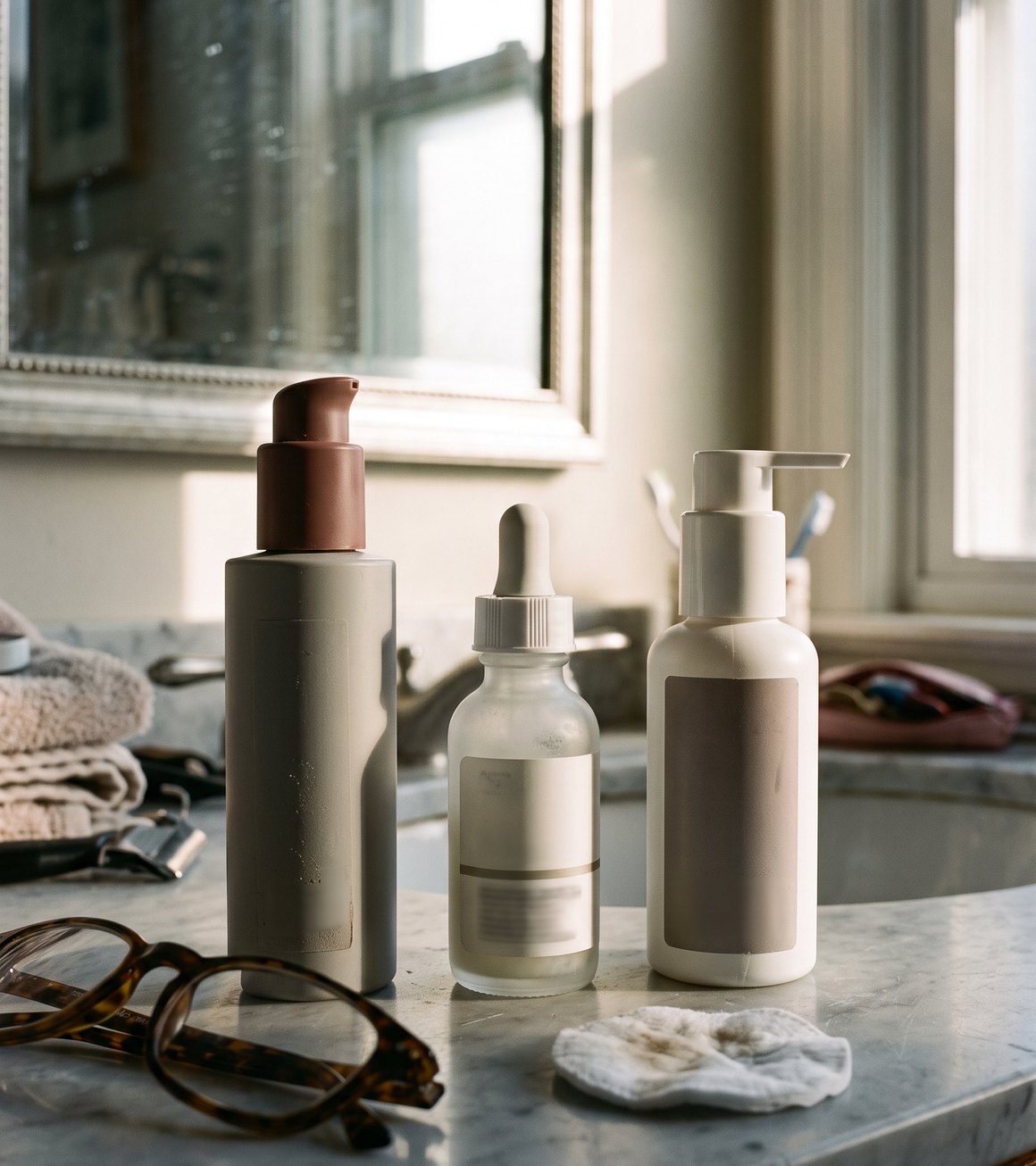
A clear glass dropper does two things people rarely think about. It lets light in. And every time the pipette comes out and goes back in, it carries a fresh load of air down into the liquid. Twice a day for ten weeks is a hundred and forty small doses of oxygen.
An airless pump in an opaque bottle has no pipette and no air gap. The base rises as the bottle empties. It costs more to fill. What you get for that is a last third of the bottle in the same condition as the first.
Why the base rises as the bottle empties.
What Clinically Studied Covers
That phrase can mean almost anything, and nobody is checking it the way most people assume.
It can mean the finished formula was put on real faces and measured. It can also mean the company selling one raw ingredient tested it in a lab dish, at a strength the finished bottle never reaches.
Nothing stops either one from being printed. Only one of them is worth reading.
The check is simple. If the study is real, the brand can name it. Journal, year, how many people, how long, and the amount used. Five facts. A brand that has them prints them. A brand that does not have them prints the phrase.
The Five Checks in Order
That was the last of the five. Here they are in order, with what Halden Skin prints against each one. Every line comes off its own carton and its own ingredient list, and not one of them is a claim about anybody else's bottle.
1 The amount of the peptide
5 parts per million
Palmitoyl pentapeptide-4 at 5 parts per million, on the carton. The published trial used 3 parts per million.
2 Where the actives sit in the list
Niacinamide fourth
Niacinamide fourth, ahead of the preservative. The peptide sits low, because parts per million weighs almost nothing, so its amount is printed instead.
3 Which active does the work
Not a retinoid
A peptide, not a retinoid. Niacinamide at 5% alongside it, the strength used in a 2005 trial of 50 women.
4 The bottle
No air gap
Opaque airless pump. No pipette and no air gap.
5 What backs "clinically studied"
All on the carton
The journal, the year, the number of people, the length and the dose, all on the carton.
The One That Prints All Five
Halden Skin answers all five checks in print, and that is the whole of the recommendation. It was built for skin over 45 that has already tried a retinoid and found the first month rough.
Palmitoyl pentapeptide-4 at 5 parts per million. Niacinamide at 5%. Glycerin and squalane to hold water in the skin while the rest does its work.
Nothing added for scent. Fragrance is one of the most common causes of a reaction to a cosmetic, and it does nothing for your face.
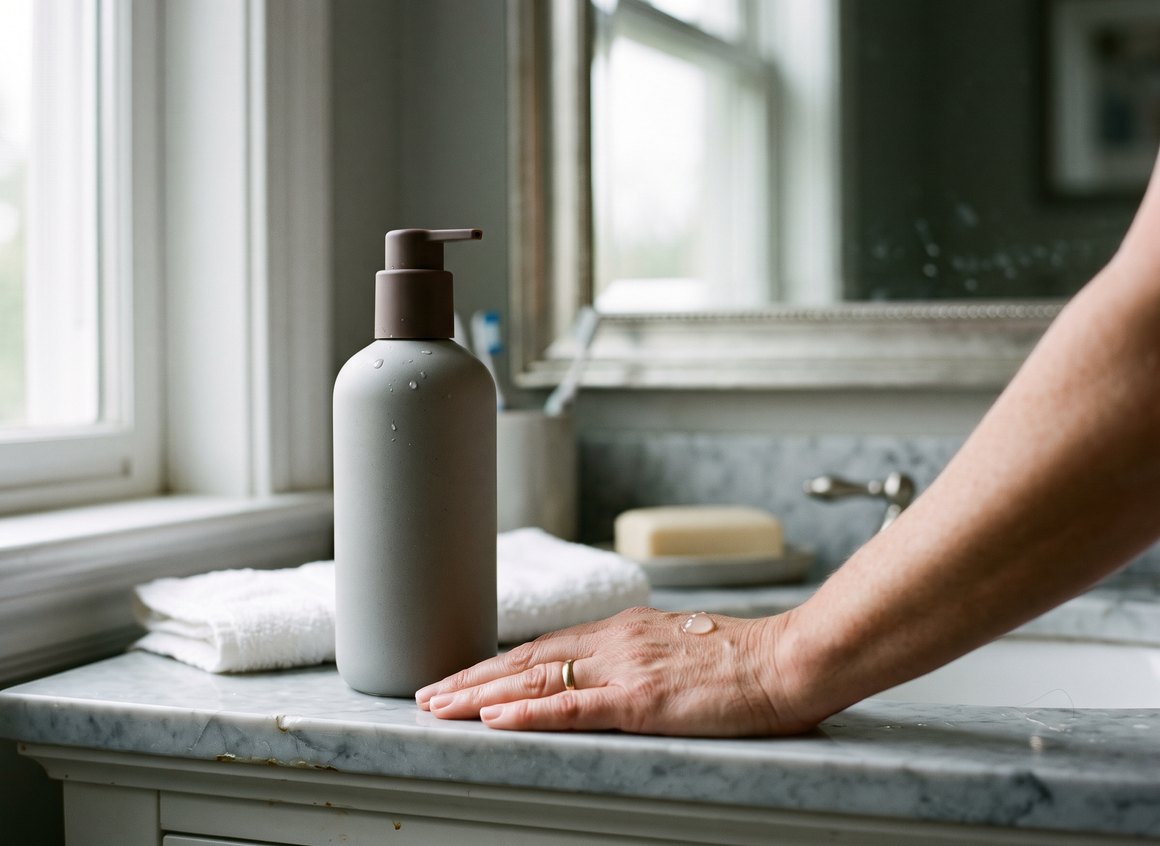
Every ingredient and every dose, printed in full.
What Buyers Say
Three notes from people who bought it after turning the bottle around.
I stopped guessing at the shelf. The amount is on the carton, so I could hold it against the study myself before I paid.
Marianne T.
Retinol gave me three rough weeks every single time I tried it. I have used this one every night since March and my skin has stayed calm.
Diane K.
The pump was the part I did not expect. No dropper, no air going back in, and the last of the bottle came out the same as the first.
Sofia M.
Why 5 Parts Per Million and Not 3
The trial ran the peptide at 3 parts per million. Halden holds it at 5. So the fair question is whether 5 is better than 3, and the honest answer is that nobody has published a trial at 5.
What that number tells you is that there is more peptide in this bottle than there was in the study. What it does not tell you is that the result will be bigger. Halden prints the exact strength anyway, so you can hold it against the trial and see the gap for yourself. Being able to see the gap is the entire reason a number goes on a carton.
Two Fair Questions
The first one is whether a peptide can do what a retinoid does. Retinoids have many more published trials behind them, and that is worth knowing before you spend.
A peptide serum is the option for skin that could not stay on a retinoid.
The second one is price. Halden is $68 for 1 fl oz. It costs that because of the airless pump and the amount of peptide in it. Both are printed where you can read them before you spend anything.
How Long You Have
The trials ran 12 weeks, so 12 weeks is when you get to have an opinion. One bottle is about 10 weeks, which means a full run takes two of them.
So the window is 100 days from the day your first bottle arrives. Judge it at week 12 and there are still two weeks left to send everything back, opened and half used, for everything you paid.
Read the label before you buy the bottle.
See The Halden Skin Serum →The window runs 100 days, opened bottle and all.