For owners of older dogs
The Two Seconds at the Bottom of the Stairs
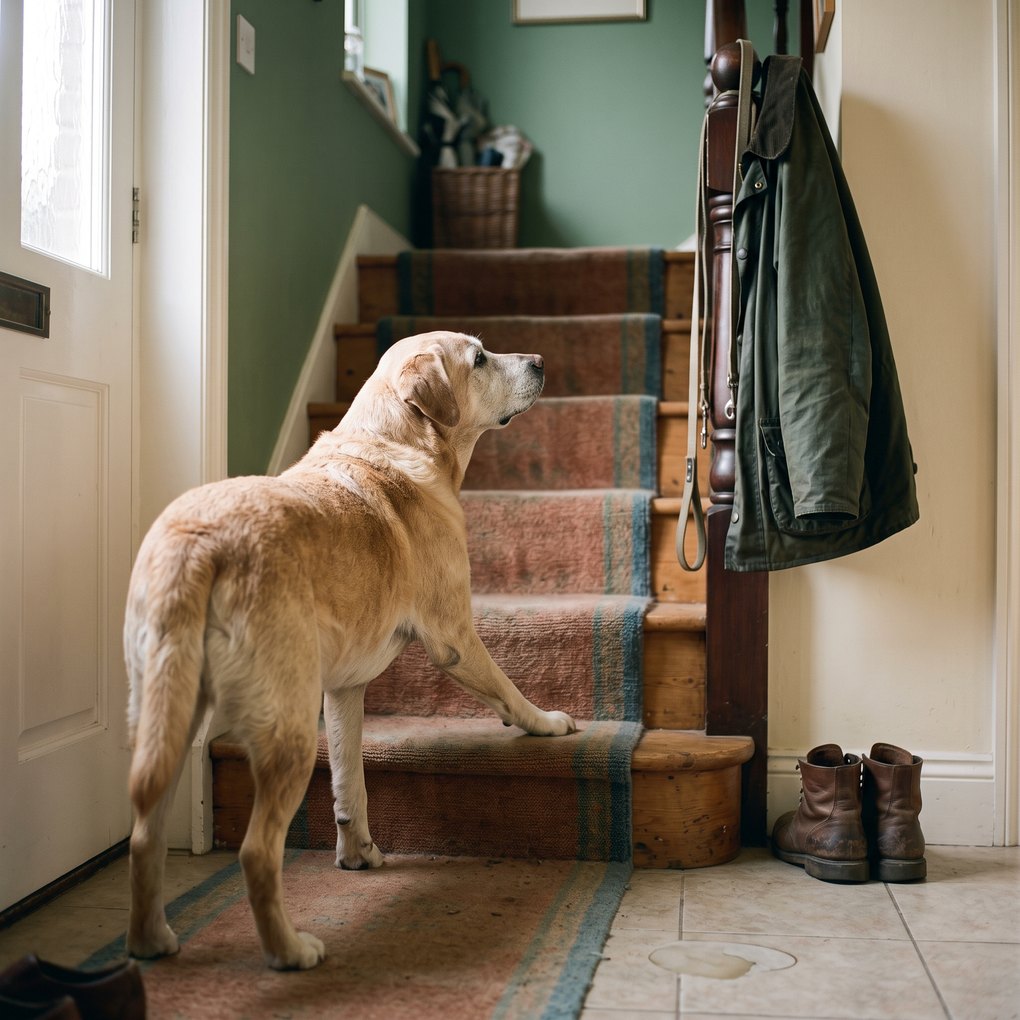
She is eleven and nothing looks wrong. She has simply started taking the last two steps one at a time.
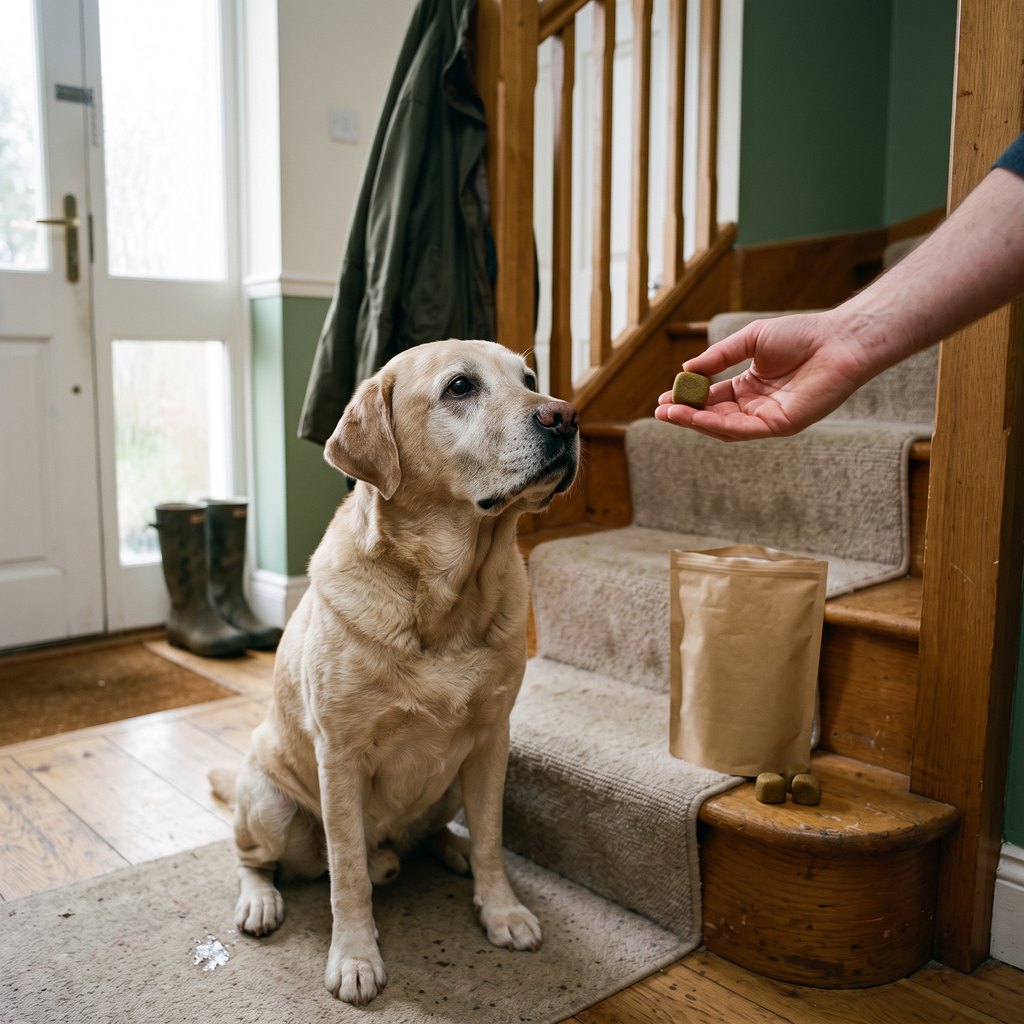
She is eleven and nothing looks wrong. She has simply started taking the last two steps one at a time.
She waits at the bottom.
Not long. Two seconds, maybe three. Then she comes up the way she always has, and you go back to the coffee and forget about it for a month.
You see it again in October. After that you start noticing other things, the way you do once you have something to notice.
She takes the rug instead of the tile. Getting up happens in two moves rather than one, front end first and back end after. Walks are fine, walks are always fine. The first thirty seconds out the door carry a stiffness that smooths out by the corner.
She is eleven, so you have been telling yourself she is slowing down because she is old. That is true, and it is also the least useful sentence an owner can say.
01
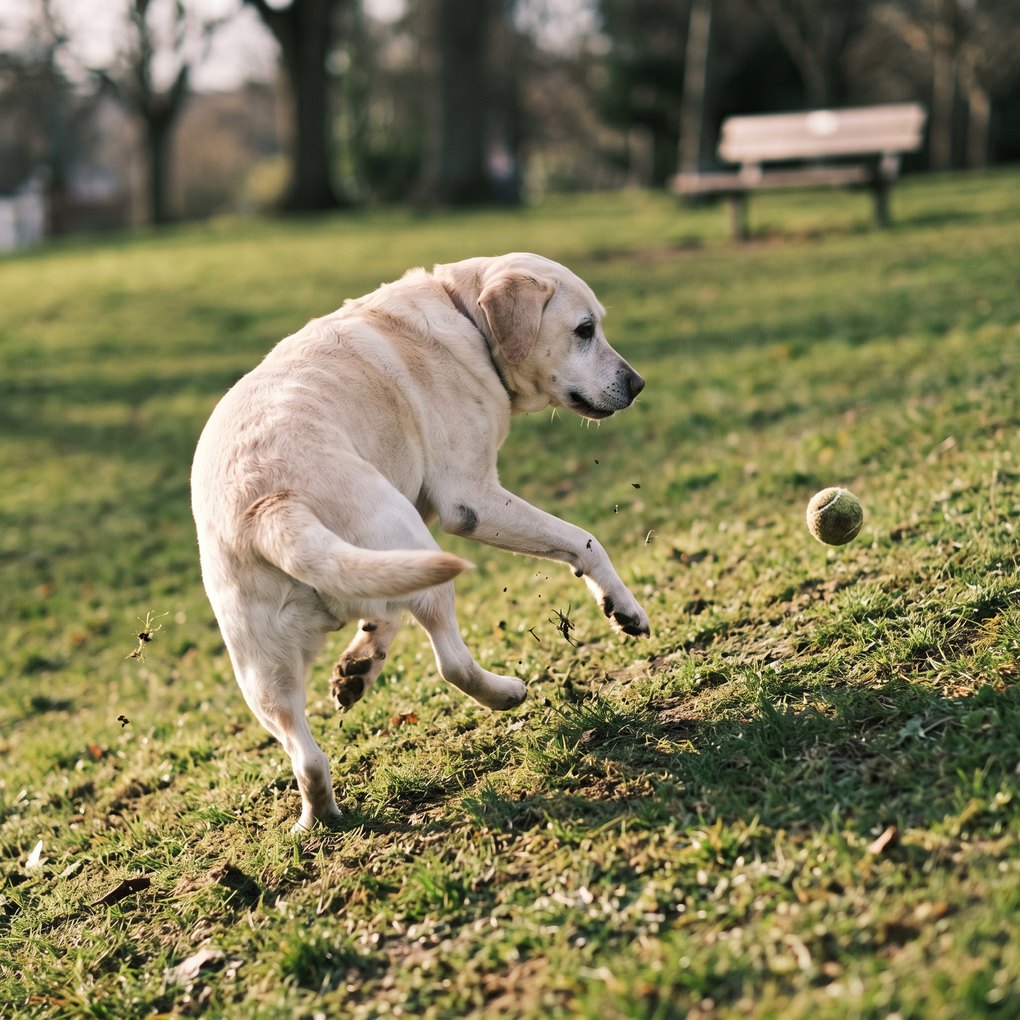
You know the version of this if you have an older dog at home. The pause before the couch, or the step off the bed that turns into a slide. The tennis ball that stays where it lands, one throw earlier than last summer.
None of it is dramatic, and none of it happens on a particular day. That is what makes it so easy to file under old and leave in the file.
There is a version of this that owners recognize a year later, going through photos. The dog in the June picture stands square. By December her weight has shifted forward, and nobody in the house saw it happen.
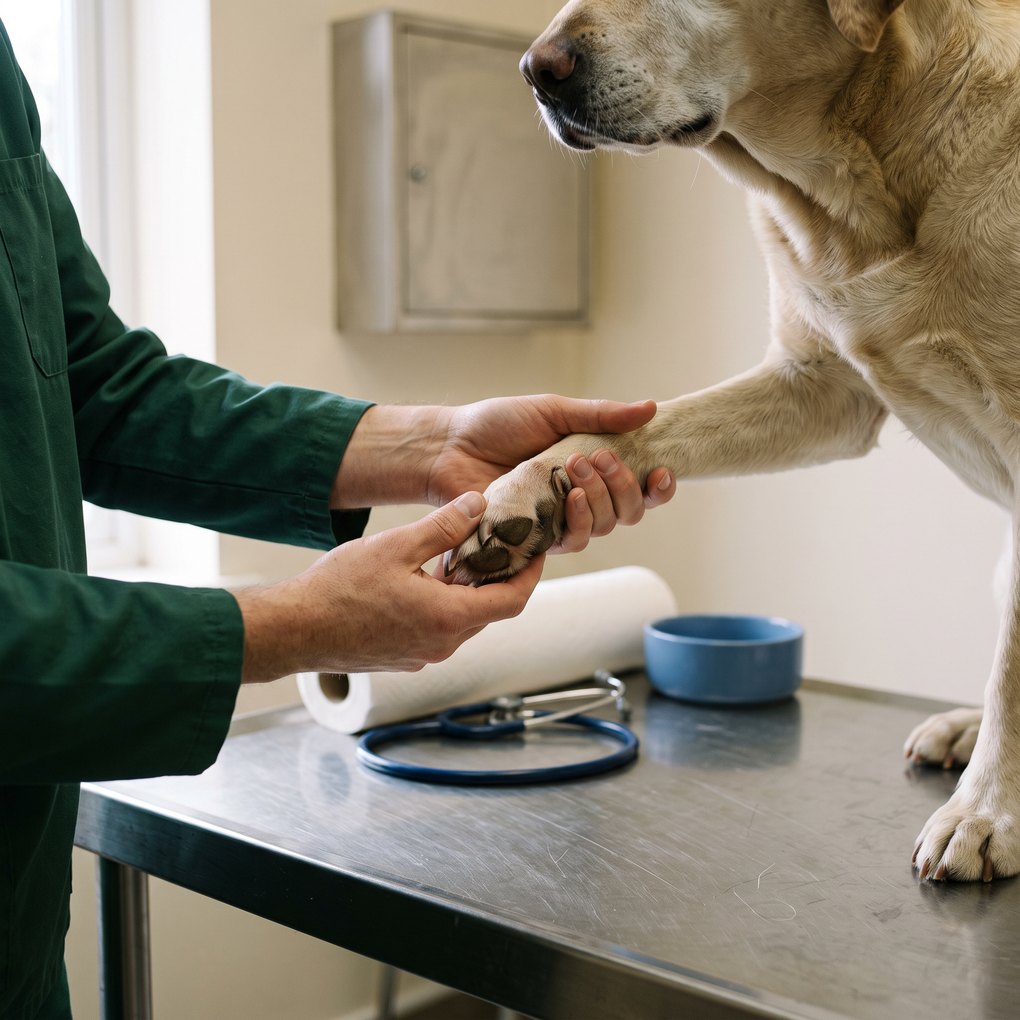
So you take her in, mostly to be told you are overreacting. The vet listens and feels along her back legs. Then she turns the appointment card over and draws the reason on the back of it.
02
Cartilage has no blood supply of its own. Nothing pipes food into it the way blood feeds a muscle. It is fed by the fluid inside the joint capsule instead. That fluid only moves when the joint moves.
Every step presses fluid out of the cartilage, and it soaks back in when the paw lifts again.
A dog's joints are fed by the walk itself.
That sets up a loop, and the loop is the real thing to watch. A stiff joint gets used a shade less. Less use means less fluid cycling through it. By the following month it is a shade stiffer than it was, and the dog has quietly rewritten how she stands up.
Call it the slow-down loop. It runs for months before anything looks like a limp, which is why the stairs tell you more than the walk does.
03
Before any of that, she checks the boring things. A nail can grow into the pad and change the way a dog stands. Some ticks carry an infection that reads as stiff joints.
Then there is the one that changes every answer after it. A stiff back can look exactly like a stiff hip from the doorway, and it needs a different plan from day one.
04
The obvious answer to a loop fed by movement is more movement, and that is half right. Loading feeds cartilage. A joint that is already sore and gets loaded anyway buys you a dog who eyes the leash the next morning.
So the question is not how far she walks. It is how much she is carrying while she does it.
05
Before anything you can buy, one thing has better evidence behind it than any ingredient on this page.
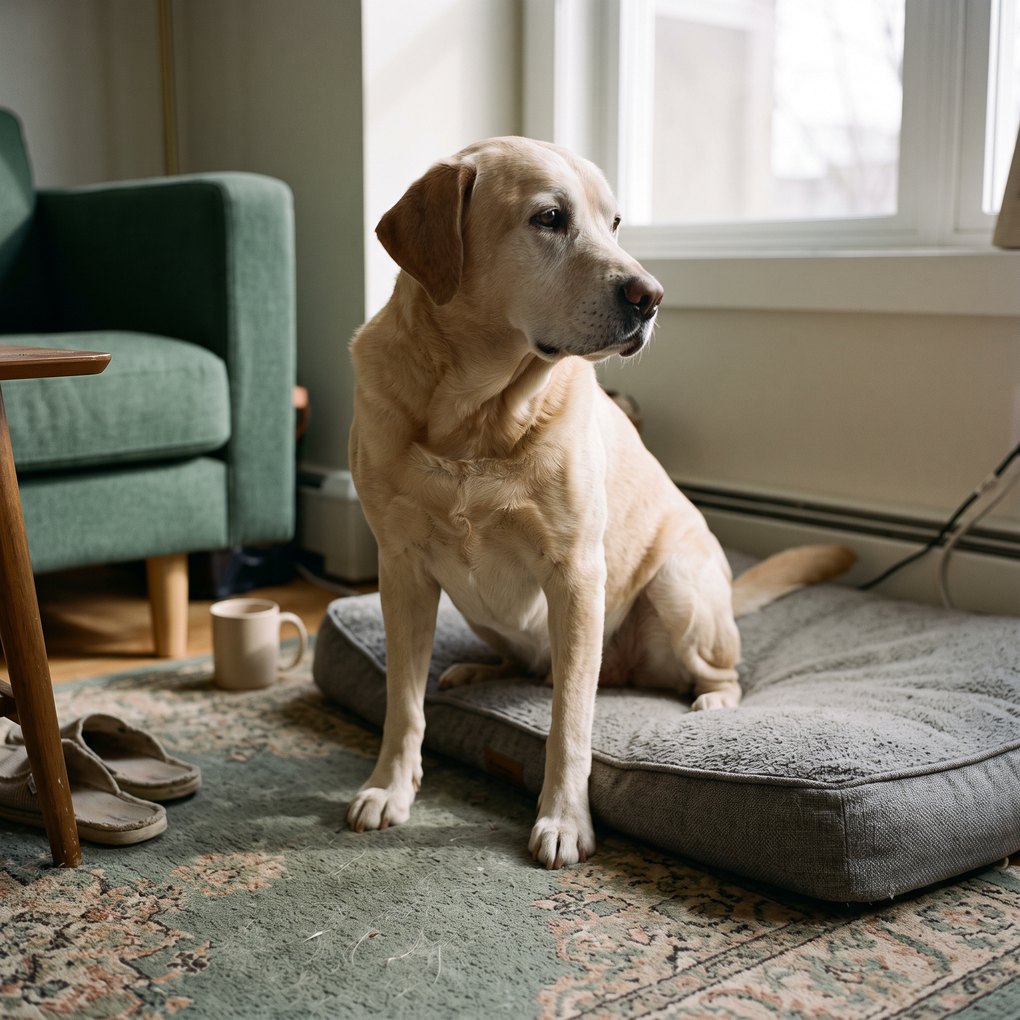
Between 1987 and 2001 a research team followed 48 Labrador retrievers from puppyhood to the ends of their lives. Half of them ate freely, and the other half ate 25 percent less of the identical food. The results ran in JAVMA in 2002.
The lean half lived a median of 1.8 years longer, and the signs of joint wear showed up later in their lives.
06
The honest number is harder to find than you would expect.
In 2018 a study in Scientific Reports went through the clinical records of a large UK population of dogs in ordinary veterinary practice. About 2.5 percent carried a recorded diagnosis of joint disease in the limbs across a single year.
That figure is a diagnosis rate. It counts the dogs whose owners raised it and whose vets wrote it down. Older estimates that get quoted far more often put the true share much higher, and those are estimates rather than counts.
07
Two ingredients have real dog trials behind them, and the rest of the shelf mostly has enthusiasm.
In 2010 JAVMA published a multicenter study of 127 dogs eating a food high in omega-3 fatty acids from fish oil. Owners scored their dogs better on rising from rest, on playing and on walking than the owners of dogs on the control food.
The same journal ran a second omega-3 study in the same issue, and that one did not ask owners anything. Thirty-eight dogs walked across a plate that measures the force each leg puts into the ground.
By day 90 the dogs on the test food were putting 5.6 percent more force through the affected leg. The dogs on the control food improved by 0.4 percent.
In 2012 the Journal of Veterinary Internal Medicine ran a systematic review of nutraceuticals for joint signs in dogs. It went through the published trials and found most of them small or loosely built. Of everything reviewed, the omega-3 work held up best. Glucosamine and chondroitin came out thin.
08
Old Trail Pet Co. sells one thing. A daily soft chew with two active ingredients in it. The rest of the list is what makes it taste like food to a dog.
The formula is the trials above and nothing else. Two ingredients that have been tested in dogs, at amounts a dog actually gets. Anything the evidence calls thin stays out, and glucosamine is first on that list. Every amount is printed on the bag, so your vet can read exactly what is going in.
Now run the check this page has been asking you to run.
The 2010 trials fed a food rather than a chew, and both papers describe the omega-3 in that food against the control food instead of in milligrams a dog swallowed. So there is no trial figure to set beside ours. The nearest published number comes from a vet school, and it is easy to find.
And one line printed across the back of the bag. This is food. It does not diagnose anything and it does not treat anything. If your dog is uncomfortable, the vet goes first, and the chew goes alongside whatever she decides.
09
EPA and DHA are not painkillers, and there is no version of this where something happens on a Tuesday.
They get built into the membrane of the body's cells, slowly, taking the place of the fats already sitting there. The body then makes its own signaling molecules out of whichever fats are in that membrane. The mix only shifts once enough of the old fat has been swapped out.
That swap runs over weeks rather than days. The bag says eight weeks. The refund window runs ninety days, which is longer than that on purpose.
10
This is a watching plan, not a promise. Write the start date on the bag and keep a note on your phone. You will not remember week one clearly by the time week eight arrives.
Nothing to see. The fats are being put into place, and none of that shows on the outside.
Watch the first thirty seconds after she stands up, not the walk. The start is where owners tend to spot a change first.
Watch the stairs and the jump into the car. Those two ask the back end to do real work.
The swap is far enough along to judge. Compare what you see against the note you wrote in week one.
The last day to send the bag back. The eight weeks are up on day 56, so you have thirty-four more days of notes to read before you decide.
11
No. Glucosamine is left out on purpose, and the 2012 review above is the reason it is left out.
Fair. The chew is soft and it smells strongly of fish, which is a good opening argument with most dogs. If she turns it down, the refund covers the bag.
Keep it. This is food and it sits alongside. Every amount is printed on the bag, so your vet can see exactly what is going in.
It is. The reason it is not fifteen is the fish oil dose. That is most of the cost of the bag, and the whole reason the bag exists.
12
A bag is always $45 on the plan. What changes with her weight is how fast she eats one, so here is the whole thing in one place. A month below is thirty days.
| Her weight | Chews a day | One bag lasts | A month costs |
|---|---|---|---|
| Up to 25 lb | 1 | 60 days | $22.50 |
| 26 to 50 lb | 2 | 30 days | $45 |
| 51 to 75 lb | 3 | 20 days | $67.50 |
| 76 lb and over | 4 | 15 days | $90 |
The plan ships to match that. A 70 pound dog gets three bags every two months and pays $67.50 a month. A 20 pound dog gets one bag every two months and pays $22.50 a month.
Nothing here runs out and there is no deadline to beat. The only real clock on this page is the eight weeks, and it starts on the day of the first chew.
One bag at $52 →Most of what goes in that note will be the first thirty seconds after she stands up, because that part compares cleanly from one month to the next. Photos help too. A picture of her standing square, taken today, beats any memory of how she looked this summer.
Whatever you decide about the bag, start the note. It costs nothing, and it is the only way you will know what changed and when.
Ninety days is long enough to know
There is no checkout though. This page is ours. Now picture it with your product on it. Want that? Your first page is free.
Get my free pageNo call. No card. Six quick questions.